
Microsoft SQL AI Developer Associate · DP-900 + DP-800
Become Microsoft SQL AI Developer Certified in Just 4 Days
Live instructor-led training, official courseware, hands-on labs, exam vouchers, and a free retake — all in one package.
What's Included
Microsoft Certified Trainer (MCT) Instructor Led Live Training
2 Microsoft Official Course (DP-900 / DP-800)
2 Microsoft Official Exam Vouchers (DP-900 / DP-800)
Free Retake Voucher for Each Exam
Microsoft Official Hands On Labs
Microsoft Vetted Practice Exams
Onsite & Online Pearson Vue Testing
Upcoming Sessions
MCA Microsoft SQL AI Developer Associate Certification (DP-900, DP-800) Boot Camp
Scroll to see additional dates.
Date
Location / Format
Price
PRIVATE – 1-ON-1
Ft Lauderdale, FL / Virtual
$3,495.00
Oct 19–22, 2026
Virtual 9am EST Start
$2,995.00
Oct 19–22, 2026
Ft Lauderdale, FL · Onsite
$2,995.00
Nov 9–12, 2026
Ft Lauderdale, FL · Onsite
$2,995.00
Dec 14–17, 2026
Virtual 9am EST Start
$2,995.00
Dec 14–17, 2026
Ft Lauderdale, FL · Onsite
$2,995.00
Jan 11–14, 2027
Ft Lauderdale, FL · Onsite
$2,995.00
Jan 11–14, 2027
Virtual 9am EST Start
$2,995.00
Training a Team? Get a Customized Team Quote
Volume pricing available for groups and corporate training.
Upcoming Sessions
Microsoft SQL AI Developer Associate
Course Details
MCA Microsoft SQL AI Developer Associate Certification (DP-900, DP-800) Boot Camp
Duration
4 Days
Exams Covered
DP-900 / DP-800
Delivery
Classroom Live
Remote Live
Remote Live
Included
Vouchers + Retake + Official Labs
Why Thousands Choose Career Camps
17+ Years of Training Experience
For more than 17 years, professionals and organizations have relied on our training expertise to build in-demand technology skills, prepare for industry certifications, and advance their teams.
5,000+ Professionals Trained
With 5,000+ professionals trained, we bring extensive experience supporting individuals, enterprise teams, government organizations, and military clients with technology skills and certification training.
Trusted by Professionals & Organizations
Trusted by thousands of IT professionals, businesses, government organizations, and enterprise teams for high-quality certification training and technology skills development.
Access to 10+ Training Providers
Get access to training from 10+ established certification training providers, giving you more options to find the right course, schedule, delivery format, and training solution for your certification goals.
Live Certified Instructors
Learn directly from experienced certified instructors—not prerecorded videos or self-paced material.
Official Training
Train with authorized, official courseware and curriculum from leading technology certification providers. Get the same industry-recognized training designed to prepare professionals for today’s most in-demand certifications and technology roles.
Course Description
Description
Prerequisites
Experience with SQL and relational databases
Basic understanding of cloud data platforms
Familiarity with application development concepts
Why Choose Us
CAREER CAMPS DIFFERENCE
Career Camps provides an in-depth hands on learning environment. Our instructors teach using demonstrations and explain concepts beyond the scope of the courseware. The best instructors are contracted from all across the US. These professionals are real world consultants who actually implement these technologies. Career Camps knows our clients work in the “real world” and it only makes sense to have an instructor with the experience in the real world.
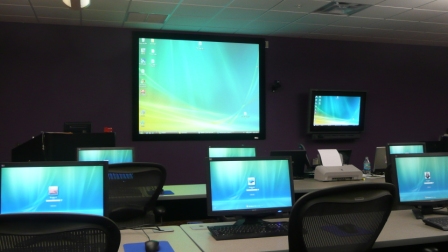 Facilities – Many of our competitors over-crowd classrooms by placing 2 to 3 students per desk and 20+ students per instructor. Often these companies “extend” the life of very old equipment with slow performance on the software used today. Our average class size is 8 students. Our facilities have the best equipment with the most comfortable, focused environment for learning.
Instructors – Our CEO holds one of the rarest Microsoft Certifications – the Microsoft Certified Learning Consultant (MCLC) Certification. This certification reflects a commitment to make sure our instructors are also actively engaged in real world consulting projects. Students expect a professional who can answer questions and demonstrate the technology.
Face to Face Training – We believe the best way to interact and learn is face to face training. Many of our competitors which offer local training are simply providing students with headphones/mic to attend class with an instructor at a remote location.
Test Pass – We offer a free retake voucher (if needed) for each of the exams required for certification. Any training center offering a “100% pass guarantee” would have to use unethical practices or unlimited test vouchers (which is not likely or practical).
Distractions – Students often look for a “local” training center so they can be close to home and work. Boot camp requires a tremendous time commitment during the program. Long class hours combined with self study each evening. The goal of boot camp is to achieve certification in a fraction of the time. We strongly recommend students attend camp away from home and work in a focused, distraction free environment.
Boot Camp – Boot camp is an accelerated training focused on teaching technology and testing students on the official exams. Most training providers “added” boot camps to the existing standard training classes they offer. These training centers think a boot camp is just a regular class where you send the student home with a voucher on the last day. Career Camps administers exams throughout the camp. Equally important – not every trainer can teach a boot camp and not all courseware is designed for boot camp format. Our trainers know the boot camp format and our courseware is designed for accelerated learning.
Florida – Career Camps has one of the most scenic locations boasting some of the best weather in US. We believe students should have a comfortable and inviting atmosphere while attending these otherwise intense programs. We place our location, facilities and amenities up against that any competitor.
Microsoft Gold Learning Partner

What You'll Learn
- Describe core data concepts.
- Identify considerations for relational data on Azure.
- Describe considerations for working with non-relational data on Azure.
- Describe an analytics workload on Azure.
- Build AI-enabled database solutions using Microsoft technologies
- Gain hands-on experience with vector search and embeddings
- Learn how to integrate AI into enterprise data platforms
- Improve application intelligence and search capabilities
- Stay current with emerging AI + data architecture trends
- Align skills with modern AI-driven development practices
Course Outline
Module 1: Explore core data concepts
- Data powers the digital transformation sweeping across organizations and society in general. But what is "data," and how is it represented and used?
- In this module, you will learn how to:
- Identify common data formats
- Describe options for storing data in files
- Describe options for storing data in databases
- Describe the characteristics of transactional data processing solutions
- Describe the characteristics of analytical data processing solutions
Module 2: Explore data roles and services
- Data professionals perform distinct roles in building and managing software solutions and work with multiple technologies and services.
- In this module, you will learn how to:
- Identify common data professional roles
- Identify standard cloud services used by data professionals
Module 3: Explore fundamental relational data concepts
- Relational database systems are a common way to store and manage transactional and analytical data in organizations of any size worldwide.
- In this module, you'll learn how to:
- Identify characteristics of relational data
- Define normalization
- Identify types of SQL statement
- Identify everyday relational database objects
Module 4: Explore relational database services in Azure
- Microsoft Azure provides multiple services for relational databases. You can choose the best relational database management system and host relational data in the cloud.
- In this module, you'll learn how to:
- Identify options for Azure SQL services
- Identify options for open-source databases in Azure
- Provision a database service on Azure
Module 5: Explore Azure Storage for non-relational data
- Azure Storage is a core Microsoft Azure service commonly used to store non-relational data.
- In this module, you'll learn how to:
- Describe features and capabilities of Azure blob storage
- Describe the features and capabilities of Azure Data Lake Gen2
- Describe the features and capabilities of Azure file storage
- Describe features and capabilities of Azure table storage
- Provision and use an Azure Storage account
Module 6: Explore fundamentals of Azure Cosmos DB
- Azure Cosmos DB provides a highly scalable store for non-relational data.
- In this module, you'll learn how to:
- Describe key features and capabilities of Azure Cosmos DB
- Identify the APIs supported in Azure Cosmos DB
- Provision and use an Azure Cosmos DB instance
Module 7: Explore fundamentals of large-scale data warehousing
- Organizations use modern data warehousing to build large-scale data analytics solutions that generate insights and drive success. Microsoft Azure includes multiple technologies you can combine to build a modern data warehousing solution.
- In this module, you will learn how to:
- Identify common elements of a modern data warehousing solution
- Describe critical features for data ingestion pipelines
- Identify common types of analytical data stores and related Azure services
- Provision Azure Synapse Analytics and use it to ingest, process, and query data
Module 8: Explore fundamentals of real-time analytics
- Learn about the basics of stream processing and the services in Microsoft Azure that you can use to implement real-time analytics solutions.
- Compare batch and stream processing.
- Describe common elements of streaming data solutions
- Describe the features and capabilities of Azure Stream Analytics
- Describe features and capabilities of Spark Structured Streaming on Azure
Module 9: Explore fundamentals of data visualization
- Learn the fundamental principles of analytical data modeling and data visualization using Microsoft Power BI as a platform to explore these principles in action.
- After completing this module, you will be able to:
- Describe a high-level process for creating reporting solutions with Microsoft Power BI
- Describe the core principles of analytical data modeling
- Identify common types of data visualization and their uses
- Create an interactive report with Power BI Desktop
- Design and implement database objects with SQL
- Understand SQL Server-based platform choices
- Build effective tables
- Optimize with indexes
- Use specialized table types
- Enforce data integrity with constraints
- Manage JSON columns and indexes
- Partition tables for scale
- Create and maintain database objects
- Implement programmability objects with SQL
- Create views
- Create stored procedures
- Create scalar functions
- Create table-valued functions
- Create triggers
- Choose when to use each option
- Implement programmability objects in SQL Server
- Write advanced T-SQL code
- Organize queries with Common Table Expressions
- Apply window functions for analytics
- Process JSON data with built-in functions
- Match patterns with regular expressions
- Find approximate matches with fuzzy string functions
- Traverse relationships with graph queries
- Compare rows with correlated subqueries
- Handle errors with TRY...CATCH
- Work with JSON functions
- Implement SQL solutions by using AI-assisted tools
- Describe AI-assisted development tools for Microsoft SQL platforms
- Interpret security impact of using AI-assisted tools
- Enable GitHub Copilot and Fabric Copilot
- Configure model and Model Context Protocol (MCP) options
- Create and configure GitHub Copilot instruction files
- Connect to MCP server endpoints, including SQL Server and Fabric Lakehouse
- Configure AI-assisted tools for database development
- Implement data security and compliance with SQL
- Protect data with encryption
- Configure dynamic data masking
- Implement row-level security
- Manage permissions and secure access
- Implement auditing
- Configure secure access to AI services
- Secure data API endpoints
- Implement security features
- Optimize database performance
- Recommend database configurations
- Preserve data integrity with transaction isolation levels and concurrency controls
- Evaluate query performance with execution plans and DMVs
- Monitor and tune queries with Query Store and Query Performance Insight
- Identify and resolve blocking and deadlocks
- Optimize query performance
- Implement CI/CD by using SQL Database Projects
- Create, build, and validate SQL Database Projects
- Configure source control and manage reference data
- Manage branching, pull requests, and conflict resolution
- Detect and resolve schema drift
- Implement CI/CD pipelines
- Design and implement a testing strategy
- Implement CI/CD using SQL Database Projects
- Integrate SQL solutions with Azure services
- Create configuration files for Data API Builder
- Define entities for REST and GraphQL
- Expose database objects, stored procedures, and views
- Explore deployment options for Data API Builder
- Recommend Azure Monitor configurations
- Handle changes with event-driven patterns
- Configure Data API Builder for solutions
- Design and implement models and embeddings with SQL
- Understand and evaluate models for SQL database workloads
- Create and manage external models in SQL
- Design embeddings for SQL database workloads
- Generate and maintain embeddings
- Generate and update embeddings in Azure SQL Database
- Design and implement intelligent search with SQL
- Choose an intelligent search approach
- Implement full-text search
- Prepare SQL for vector search
- Implement vector search query patterns
- Implement hybrid search and ranking
- Implement intelligent search with full-text, vector, and hybrid queries
- Design and implement RAG with SQL
- Identify RAG use cases and architecture
- Prepare retrieval context for augmentation
- Augment prompts with database context
- Generate and process RAG responses
- Implement a RAG solution
Frequently Asked Questions
What is the Microsoft SQL AI Developer Associate (DP-900, DP-800) Boot Camp?
This instructor-led Microsoft SQL AI Developer Associate Boot Camp is an accelerated training program designed to prepare participants for Microsoft’s data and AI certification path. The boot camp combines DP-900: Microsoft Azure Data Fundamentals with DP-800: Developing AI-Enabled Database Solutions, covering core data concepts, Azure data services, SQL development, AI-enabled databases, vector search, semantic search, and Retrieval-Augmented Generation (RAG).
What certifications can I earn through this Microsoft SQL AI Developer Boot Camp?
The boot camp prepares you for Microsoft Certified: Azure Data Fundamentals through Exam DP-900 and Microsoft Certified: SQL AI Developer Associate through Exam DP-800. DP-800 focuses on designing, developing, securing, optimizing, and deploying AI-enabled database solutions across Microsoft SQL platforms.
Who should take the SQL AI Developer Associate Boot Camp?
This boot camp is ideal for SQL developers, database developers, database administrators, data professionals, software developers, data architects, and IT professionals who want to build AI-enabled database solutions. It is also a strong option for SQL professionals looking to add modern AI capabilities to their existing database development skills.
Do I need SQL experience before taking this boot camp?
Some SQL and database experience is recommended, particularly for the DP-800 portion of the training. Microsoft expects candidates to have experience developing databases and writing T-SQL, along with familiarity with AI concepts such as embeddings, vectors, and models.
Will this boot camp teach me how to use AI with SQL databases?
Yes. The DP-800 curriculum includes AI capabilities such as embeddings, vector search, semantic search, hybrid search, and Retrieval-Augmented Generation (RAG). Participants learn how AI can be integrated directly into SQL-based database solutions to support intelligent applications and AI-driven experiences.
What is the difference between DP-900 and DP-800?
DP-900 focuses on foundational knowledge of data concepts and Microsoft Azure data services, making it appropriate for professionals building their understanding of cloud data. DP-800 is an intermediate developer-focused exam that goes much deeper into building, securing, optimizing, deploying, and adding AI capabilities to SQL database solutions.
Related products
-
MCE Agentic AI Solutions Architect Certification (AB-100) Boot Camp
Price range: $2,295.00 through $2,595.00 Course Details This product has multiple variants. The options may be chosen on the product page -
MCA Intelligent Applications Builder Certification (AB-410) Boot Camp
Price range: $2,295.00 through $2,595.00 Course Details This product has multiple variants. The options may be chosen on the product page -
MCA Azure AI Cloud Developer Certification (AI-200) Boot Camp
Price range: $3,195.00 through $3,795.00 Course Details This product has multiple variants. The options may be chosen on the product page
Ready to Take the Next Step?
Choose your upcoming training date or talk with our training advisors about the right option for you or your team.