
VMware Cloud Foundation: Solution Architecture and Design · 2V0-13.25
Pass the VMware Cloud Foundation VCP-VCF Architect Certification in Just 5 Days
Live instructor-led training, official courseware, and hands-on labs — all in one package.
What's Included
VMware Certified Trainer Instructor Led Live Training
1 VMware Official Courses (VCFSAD9 2V0-13.25)
VMware Official Hands on Labs
Upcoming Sessions
VMware Cloud Foundation: Solution Architecture and Design (VCP-VCF)
Scroll to see additional dates.
Date
Location / Format
Price
Nov 30 – Dec 4, 2026
Virtual 10am EST Start
$4,250.00
Training a Team? Get a Customized Team Quote
Volume pricing available for groups and corporate training.
Upcoming Sessions
VMware Cloud Foundation: Solution Architecture and Design
Course Details
VMware Cloud Foundation: Solution Architecture and Design (VCP-VCF)
Duration
5 Days
Exams Covered
VCFSAD9 2V0-13.25
Delivery
Remote Live
Included
Certified Instructor + Official Materials + Official Labs
Why Thousands Choose Career Camps
17+ Years of Training Experience
For more than 17 years, professionals and organizations have relied on our training expertise to build in-demand technology skills, prepare for industry certifications, and advance their teams.
5,000+ Professionals Trained
With 5,000+ professionals trained, we bring extensive experience supporting individuals, enterprise teams, government organizations, and military clients with technology skills and certification training.
Trusted by Professionals & Organizations
Trusted by thousands of IT professionals, businesses, government organizations, and enterprise teams for high-quality certification training and technology skills development.
Access to 10+ Training Providers
Get access to training from 10+ established certification training providers, giving you more options to find the right course, schedule, delivery format, and training solution for your certification goals.
Live Certified Instructors
Learn directly from experienced certified instructors—not prerecorded videos or self-paced material.
Official Training
Train with authorized, official courseware and curriculum from leading technology certification providers. Get the same industry-recognized training designed to prepare professionals for today’s most in-demand certifications and technology roles.
Course Description
Description
Design and architect modern private cloud environments with VMware Cloud Foundation (VCF) 9.0 through this intensive 5-day VMware Cloud Foundation: Solution Architecture and Design course. The training focuses on the architectural principles and design decisions required to create VCF solutions that meet business, technical, operational, security, and scalability requirements.
You will learn how to translate business and technical requirements into effective VCF 9.0 architecture and design decisions, covering conceptual, logical, and physical design considerations. The course explores key areas including VCF architecture, workload domains, compute, storage, networking, lifecycle management, availability, performance, recoverability, security, monitoring, capacity planning, workload migration, and VCF consumption strategies.
Through instructor-led instruction and practical design exercises, you’ll develop the ability to evaluate architectural requirements, identify constraints and risks, select appropriate VMware technologies, and design solutions that can support current workloads while allowing for future growth.
The course is designed to build the architecture and design knowledge needed to prepare for the VMware Cloud Foundation 9.0 Architect (2V0-13.25) exam and the VMware Certified Professional – VMware Cloud Foundation Architect (VCP-VCF Architect) certification.
Prerequisites
For the VMware Cloud Foundation 9.0 Architect (2V0-13.25) certification, Broadcom recommends approximately 1–2 years of experience designing VMware-based solutions, including at least 6 months of experience working specifically with VMware Cloud Foundation. Candidates should also understand capacity planning, disaster recovery, scalability, security, interoperability, compatibility, and core data center services such as DNS and NTP.
Why Choose Us
CAREER CAMPS DIFFERENCE
Career Camps provides an in-depth hands on learning environment. Our instructors teach using demonstrations and explain concepts beyond the scope of the courseware. The best instructors are contracted from all across the US. These professionals are real world consultants who actually implement these technologies. Career Camps knows our clients work in the “real world” and it only makes sense to have an instructor with the experience in the real world.
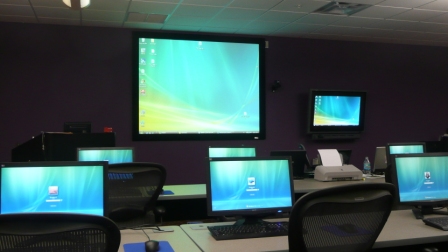 Facilities – Many of our competitors over-crowd classrooms by placing 2 to 3 students per desk and 20+ students per instructor. Often these companies “extend” the life of very old equipment with slow performance on the software used today. Our average class size is 8 students. Our facilities have the best equipment with the most comfortable, focused environment for learning.
Instructors – Our CEO holds one of the rarest Microsoft Certifications – the Microsoft Certified Learning Consultant (MCLC) Certification. This certification reflects a commitment to make sure our instructors are also actively engaged in real world consulting projects. Students expect a professional who can answer questions and demonstrate the technology.
Face to Face Training – We believe the best way to interact and learn is face to face training. Many of our competitors which offer local training are simply providing students with headphones/mic to attend class with an instructor at a remote location.
Test Pass – We offer a free retake voucher (if needed) for each of the exams required for certification. Any training center offering a “100% pass guarantee” would have to use unethical practices or unlimited test vouchers (which is not likely or practical).
Distractions – Students often look for a “local” training center so they can be close to home and work. Boot camp requires a tremendous time commitment during the program. Long class hours combined with self study each evening. The goal of boot camp is to achieve certification in a fraction of the time. We strongly recommend students attend camp away from home and work in a focused, distraction free environment.
Boot Camp – Boot camp is an accelerated training focused on teaching technology and testing students on the official exams. Most training providers “added” boot camps to the existing standard training classes they offer. These training centers think a boot camp is just a regular class where you send the student home with a voucher on the last day. Career Camps administers exams throughout the camp. Equally important – not every trainer can teach a boot camp and not all courseware is designed for boot camp format. Our trainers know the boot camp format and our courseware is designed for accelerated learning.
Florida – Career Camps has one of the most scenic locations boasting some of the best weather in US. We believe students should have a comfortable and inviting atmosphere while attending these otherwise intense programs. We place our location, facilities and amenities up against that any competitor.
What You'll Learn
- Describe and apply an appropriate design framework.
- Apply a design process for gathering requirements, constraints, assumptions and risks.
- Understand VMware VCF constructs such as site, fleet and instance.
- Understand data center fabric needs to support VCF.
- Understand VCF storage and network design options.Design a single site single fleet deployment of VCF with recommended design options.
- Design management and workload domains with appropriate compute and storage resources.
- Design a consumption layer leveraging VCF Automation and Supervisor.Understand the day-2 operating model, operations metrics, and reporting needs of VCF.
- Understand future opportunities to extend the VCF platform with advanced services.
Course Outline
1. Course Introduction
- Introduction and course logistics
- Course Objectives
2. Architecture Frameworks and Models
- Architecture Frameworks
- Business Objectives
- Design Models
3. VMware Cloud Foundation Overview
- VCF Design Blueprints and Use Cases
- Upgrade Overview
- License Management Overview
4. VCF Fleet and Instance Design
- Sites, Fleets and Instances
- Management and Workload Domains
- Designing Conceptual and Logical Designs
- VCF Operations Platform Design
5. Building the Physical Fabric and VCF Networking Design
- Networking Fabric Design
- VCF Networking Design
6. Storage and vSAN Essentials
- VCF Storage Overview
- Storage Design Considerations
7. Management Domain
- Management Domain Design Overview
- Management Domain Design Sizing Considerations
- Management Domain Design Decisions
- Storage Requirements for Management Workloads
- Networking Requirements for Management Workloads
- Platform-Based Protection Mechanisms
8. Workload Domains
- Workload Domain Design Overview
- Cluster Design Overview
- Storage Requirement for Workload Domains
- Networking Requirements for Workload Domains
- Security Design Considerations
9. VCF AMPRS Considerations Summary
- Designing for Availability
- Designing for Manageability
- Designing for Performance
- Designing for Recoverability
- Designing for Security
10. VCF Consumption Design with VCF Automation and Supervisor
- VCF Automation Overview
- VCF Automation Tenancy Models
- VCF Automation and Supervisor Components
- VCF Automation and Supervisor Design Considerations
11. Day 2 Operations with VCF
- Day 2 Operations Overview
- VCF Operations Overview and Metric/Dashboard Design
- VCF Operations Key Metrics for Compute, Storage and Networks
- VCF Operations for Networks Overview and Design
12. VCF Upgrade Considerations
- VCF Upgrade Overview
- VCF Upgrade Key Considerations
13. VCF Advanced Services
- Introduction to Private AI
- Introduction to VMware Live Recovery
Frequently Asked Questions
What is VMware Cloud Foundation: Solution Architecture and Design?
VMware Cloud Foundation: Solution Architecture and Design is an advanced VMware training course that teaches IT professionals how to design VMware Cloud Foundation (VCF) solutions for enterprise private cloud environments. The course focuses on architecture, infrastructure requirements, workload design, availability, manageability, performance, recoverability, security, capacity planning, scalability, and integration.
What does a VMware Cloud Foundation architect need to know?
A VCF architect needs to understand how to translate business requirements into a technical solution. This includes knowledge of VCF architecture, compute, storage, networking, cloud management, availability, performance, recoverability, security, capacity planning, scalability, interoperability, and operational requirements.
What VMware technologies are important for VCF architecture?
VMware Cloud Foundation integrates key VMware technologies including VMware vSphere, VMware vSAN, VMware NSX, and VCF management and operations capabilities. A VCF architect must understand how these technologies work together as an integrated private cloud platform rather than designing each product independently.
What should a VCF architect consider when integrating with existing infrastructure?
A VCF architect should evaluate existing networking, storage, compute, identity, security, management systems, DNS, NTP, applications, and operational processes. Compatibility, interoperability, dependencies, assumptions, risks, and technical constraints should be documented as part of the solution design.
What are the most important design considerations for a production VCF environment?
Production VCF architecture should address availability, manageability, performance, recoverability, security, capacity, scalability, networking, storage, compute, monitoring, interoperability, compatibility, disaster recovery, and operational requirements. Architects should also document assumptions, risks, dependencies, and constraints.
Who should take VMware Cloud Foundation: Solution Architecture and Design?
The course is well suited for solution architects, infrastructure architects, cloud architects, VMware consultants, virtualization architects, systems engineers, senior VMware administrators, and IT professionals responsible for designing private cloud infrastructure.
Related products
-

VMware Cloud Foundation: Troubleshooting [v9.0] (VCFT9)
$4,850.00 Course Details This product has multiple variants. The options may be chosen on the product page

Ready to Take the Next Step?
Choose your upcoming training date or talk with our training advisors about the right option for you or your team.