
Multi-Agent AI Solutions · AI-500
Become Multi-Agent AI Solutions Certified in Just 5 Days
Live instructor-led training, official courseware, hands-on labs, exam vouchers, and a free retake — all in one package.
What's Included
Microsoft Certified Trainer (MCT) Instructor Led Live Training
1 Microsoft Official Course (AI-500)
1 Microsoft Official Exam Voucher (AI-500)
Free Retake Voucher for Each Exam
Microsoft Official Hands On Labs
Microsoft Vetted Practice Exams
Onsite & Online Pearson Vue Testing
Upcoming Sessions
MCE Multi-Agent AI Solutions Certification (AI-500) Boot Camp
Scroll to see additional dates.
Date
Location / Format
Price
Oct 12–16, 2026
Sarasota, FL · Onsite
$3,495.00
Nov 9–13, 2026
Sarasota, FL · Onsite
$3,495.00
Dec 7–11, 2026
Sarasota, FL · Onsite
$3,495.00
Jan 18–22, 2027
Sarasota, FL · Onsite
$3,495.00
Feb 8–12, 2027
Sarasota, FL · Onsite
$3,495.00
Apr 12–16, 2027
Sarasota, FL · Onsite
$3,495.00
May 10–14, 2027
Sarasota, FL · Onsite
$3,495.00
Training a Team? Get a Customized Team Quote
Volume pricing available for groups and corporate training.
Upcoming Sessions
Multi-Agent AI Solutions
Course Details
MCE Multi-Agent AI Solutions Certification (AI-500) Boot Camp
Duration
5 Days
Exams Covered
AI-500
Delivery
Classroom Live
Remote Live
Remote Live
Included
Vouchers + Retake + Official Labs
Why Thousands Choose Career Camps
17+ Years of Training Experience
For more than 17 years, professionals and organizations have relied on our training expertise to build in-demand technology skills, prepare for industry certifications, and advance their teams.
5,000+ Professionals Trained
With 5,000+ professionals trained, we bring extensive experience supporting individuals, enterprise teams, government organizations, and military clients with technology skills and certification training.
Trusted by Professionals & Organizations
Trusted by thousands of IT professionals, businesses, government organizations, and enterprise teams for high-quality certification training and technology skills development.
Access to 10+ Training Providers
Get access to training from 10+ established certification training providers, giving you more options to find the right course, schedule, delivery format, and training solution for your certification goals.
Live Certified Instructors
Learn directly from experienced certified instructors—not prerecorded videos or self-paced material.
Official Training
Train with authorized, official courseware and curriculum from leading technology certification providers. Get the same industry-recognized training designed to prepare professionals for today’s most in-demand certifications and technology roles.
Course Description
- Description
- Prerequisites
- Our Facilities
- Why Choose Us
- Microsoft Gold Learning Partner
- What You'll Learn
Description
Prerequisites
Prerequisite: The Microsoft Certified: Azure AI Apps and Agents Developer Associate certification (earned by passing AI-103) is required to earn the Microsoft Certified: Multi-Agent AI Solutions Expert credential. Prior hands-on experience developing AI solutions, working with Microsoft Foundry, Python, Azure services, and agentic AI technologies is strongly recommended.
Our Facilities
CAREER CAMPS FACILITIES
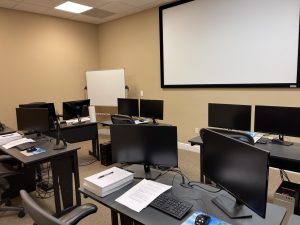 CAMPUS – Career Camps built out a stand alone training center (not a hotel conference room) with spacious classrooms, new desk, Herman Miller Aeron chairs & comfortable common areas. Each student has a dedicated desk with two monitors. Each classroom has a maximum of two rows – so everyone is able to be engaged without the “back row” feeling.
CLASSROOM EQUIPMENT – Students work on a dedicated Dell Client Desktop with 32GB memory with 512GB SSD drives – All Labs are executed the extremely fast Microsoft Data Center Hosted Lab Environment.
CAMPUS INTERNET – The campus is connected with a 1Gbps (1,000 Mbps) Verizon Fios Business Connection which provides complete internet (including VPN) access for students.
COMMON AREA – Amenities including snacks, drinks (Coffee, 100% juices, sodas, etc) all complimentary.
LODGING – We use the Hyatt Place Lakewood Ranch. This “upgraded” hotel offers extremely comfortable beds, great breakfast and very fast internet access.
NEAR BY AMENITIES – Many shops, restaurants and grocery options are available within walking distance. Additionally – the hotel provided scheduled shuttle services. Restaurants like Bone Fish Grill, Ruby Tuesday’s, Five Guys, Chipotle, Quiznos, Chili’s and over 20 additional choices in the immediate area. All of these options are offered in a pedestrian walking village.
Why Choose Us
CAREER CAMPS DIFFERENCE
Career Camps provides an in-depth hands on learning environment. Our instructors teach using demonstrations and explain concepts beyond the scope of the courseware. The best instructors are contracted from all across the US. These professionals are real world consultants who actually implement these technologies. Career Camps knows our clients work in the “real world” and it only makes sense to have an instructor with the experience in the real world.
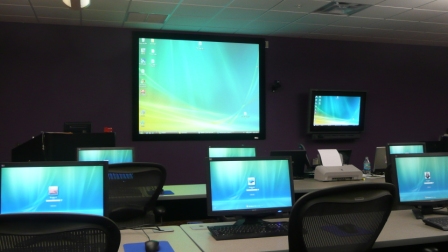 Facilities – Many of our competitors over-crowd classrooms by placing 2 to 3 students per desk and 20+ students per instructor. Often these companies “extend” the life of very old equipment with slow performance on the software used today. Our average class size is 8 students. Our facilities have the best equipment with the most comfortable, focused environment for learning.
Instructors – Our CEO holds one of the rarest Microsoft Certifications – the Microsoft Certified Learning Consultant (MCLC) Certification. This certification reflects a commitment to make sure our instructors are also actively engaged in real world consulting projects. Students expect a professional who can answer questions and demonstrate the technology.
Face to Face Training – We believe the best way to interact and learn is face to face training. Many of our competitors which offer local training are simply providing students with headphones/mic to attend class with an instructor at a remote location.
Test Pass – We offer a free retake voucher (if needed) for each of the exams required for certification. Any training center offering a “100% pass guarantee” would have to use unethical practices or unlimited test vouchers (which is not likely or practical).
Distractions – Students often look for a “local” training center so they can be close to home and work. Boot camp requires a tremendous time commitment during the program. Long class hours combined with self study each evening. The goal of boot camp is to achieve certification in a fraction of the time. We strongly recommend students attend camp away from home and work in a focused, distraction free environment.
Boot Camp – Boot camp is an accelerated training focused on teaching technology and testing students on the official exams. Most training providers “added” boot camps to the existing standard training classes they offer. These training centers think a boot camp is just a regular class where you send the student home with a voucher on the last day. Career Camps administers exams throughout the camp. Equally important – not every trainer can teach a boot camp and not all courseware is designed for boot camp format. Our trainers know the boot camp format and our courseware is designed for accelerated learning.
Florida – Career Camps has one of the most scenic locations boasting some of the best weather in US. We believe students should have a comfortable and inviting atmosphere while attending these otherwise intense programs. We place our location, facilities and amenities up against that any competitor.
Microsoft Gold Learning Partner

What You'll Learn
In this AI-500 Multi-Agent AI Solutions Expert Boot Camp, you’ll develop the skills to design, build, evaluate, secure, and deploy production-ready multi-agent AI solutions on Microsoft Azure. You’ll learn how to:
- Architect Multi-Agent AI Solutions – Design scalable agentic AI architectures, workflows, agent roles, autonomy levels, memory, communication, and tool integration.
- Build AI Agents in Azure – Develop and orchestrate multi-agent applications using Microsoft Foundry and the Microsoft Agent Framework.
- Implement Agent Orchestration – Build sequential, parallel, peer-to-peer, and orchestrator-based workflows that enable multiple AI agents to collaborate effectively.
- Work with MCP and Agent Integrations – Use Model Context Protocol (MCP) and agent-to-agent communication to connect AI agents with tools, applications, APIs, and external services.
- Implement RAG and AI Knowledge Systems – Build Retrieval-Augmented Generation (RAG) solutions using embeddings, vector search, semantic search, and enterprise data.
- Manage Agent Memory and Context – Design short-term and long-term memory, context management, state persistence, and secure information sharing between agents.
- Evaluate AI Agent Performance – Test agent behavior, tool usage, memory, retrieval quality, workflows, and overall solution performance using systematic AI evaluation strategies.
- Monitor and Optimize AI Solutions – Implement tracing, observability, telemetry, token management, cost controls, performance optimization, and continuous improvement.
- Secure Multi-Agent AI Applications – Apply identity, authentication, authorization, Azure RBAC, secrets management, network security, and Zero Trust principles.
- Implement AI Guardrails and Responsible AI – Protect AI applications with input, output, and tool-use guardrails while addressing responsible AI, governance, and security requirements.
- Deploy AI Solutions to Production – Implement CI/CD, testing, release management, infrastructure as code, blue/green deployments, canary releases, and rollback strategies for multi-agent applications.
- Prepare for the AI-500 Exam – Reinforce the skills and concepts covered by Exam AI-500: Designing and Implementing Multi-Agent AI Solutions and prepare for Microsoft’s Multi-Agent AI Solutions Expert certification.
Course Outline
Module 1: Architect Multi-Agent AI Solutions
- Understand multi-agent AI architecture and production requirements
- Decompose business goals into workflows, agents, subagents, and tools
- Design sequential, parallel, peer-to-peer, and orchestrator-based workflows
- Define agent personas, scopes, boundaries, autonomy levels, and behavioral guidelines
- Establish tool permissions, authentication, and security boundaries
- Design human-in-the-loop workflows and human-AI experiences
- Design short-term and long-term agent memory
- Implement context sharing across agents
- Select appropriate AI models based on task requirements
- Design agent-to-agent and agent-to-tool communication
- Plan Zero Trust architecture for multi-agent AI systems
- Design state persistence and tenant isolation
- Select Azure compute resources based on scalability, reliability, security, and cost
- Design observability, tracing, logging, and monitoring architectures
- Establish development environments and SDLC practices for multi-agent AI
Module 2: Develop Multi-Agent AI Solutions in Azure
- Prompt Engineering and Agent Behavior
- Implement advanced prompt engineering techniques
- Use examples and dynamic context injection
- Create defensive prompts and behavioral guidelines
- Manage the prompt lifecycle
- Build context-aware agent behaviors
- Develop model and agent fine-tuning strategies
- Agent Memory, Context, and Knowledge
- Design context management for individual and multi-agent systems
- Implement context accumulation, retrieval, injection, and compaction
- Design secure agent memory strategies
- Manage session, shared, and long-term memory
- Implement multi-agent Retrieval-Augmented Generation (RAG)
- Improve chunking, embeddings, and retrieval precision
- Integrate search and semantic search
- Connect agents to knowledge sources through RAG and MCP
- Tools and Integrations
- Implement function calling and tool use
- Integrate external resources and services
- Design and build Model Context Protocol (MCP) servers and clients
- Connect MCP solutions using Azure Functions, Azure Logic Apps, and Azure API Management
- Implement tool validation and error handling
- Create fallback strategies for failed tools and services
- Multi-Agent Orchestration
- Implement hub-and-spoke architectures
- Implement sequential and parallel agent workflows
- Implement peer-to-peer agent communication
- Implement orchestrator-subagent patterns
- Integrate human approval and override workflows
- Implement prompt, semantic, and response caching
- Manage agent spawning and concurrent execution
- Integrate existing agents using MCP and Agent2Agent (A2A)
- Build multi-agent solutions using Microsoft Agent Framework
- Work with LangChain and LangGraph orchestration patterns
- Implement middleware for logging, authorization, and exception handling
- Explore advanced multi-agent capabilities using Hugging Face Transformers
Module 3: Evaluate, Optimize, and Monitor Multi-Agent AI Solutions
- AI Evaluation and Validation
- Design evaluation strategies for multi-agent applications
- Evaluate agent memory and context
- Evaluate knowledge retrieval and RAG performance
- Evaluate tool usage and tool results
- Evaluate prompt effectiveness
- Implement human review processes using Microsoft Foundry
- Performance and Quality Optimization
- Optimize agent task duration and workflow parallelism
- Manage rate limits and concurrent execution
- Diagnose context-window problems
- Address summary drift and loss of entity continuity
- Improve vector-based recall and context retrieval
- Implement continuous improvement strategies
- Use LLM-as-a-judge evaluation
- Generate synthetic evaluation data
- Implement user feedback loops and semantic optimization
- Observability and Monitoring
- Monitor agent health and workflow reliability
- Track workflow failures and agent coordination
- Implement cross-service trace correlation
- Detect behavioral drift and quality regression
- Monitor Azure service availability and performance
- Track SLA and reliability requirements
- Implement token usage controls
- Optimize tool calls and agent loops
- Monitor AI costs, quotas, allocations, and chargebacks
- Implement Microsoft Foundry tracing
- Track prompts, tokens, correlation IDs, and execution activity
- Configure alerts and automated remediation
Module 4: Secure and Govern Multi-Agent AI Solutions
- Security and Identity
- Implement identity-based access controls
- Establish network boundaries and security policies
- Configure Azure RBAC
- Design authentication flows for multi-agent applications
- Implement OAuth 2.0 and API-key authentication
- Understand on-behalf-of authentication and user impersonation
- Secure agent-to-agent and agent-to-tool communication
- Implement Azure Key Vault for secrets and certificates
- Manage secret rotation and encryption
- Apply shift-left security principles
- Use AI Red Teaming capabilities in Microsoft Foundry
- AI Guardrails and Responsible AI
- Design multi-layer guardrail strategies
- Protect user inputs and agent outputs
- Secure tool calls and tool responses
- Create custom guardrails for business and domain requirements
- Test and validate guardrails
- Use synthetic data for guardrail testing
- Apply responsible AI principles to multi-agent solutions
Module 5: Deploy Multi-Agent AI Solutions to Azure
- Plan development, test, acceptance, and production environments
- Design DTAP deployment strategies
- Implement blue/green deployments
- Implement canary releases
- Create multi-environment release strategies
- Develop rollback procedures
- Implement unit testing
- Implement integration and regression testing
- Automate AI evaluations
- Design CI/CD pipelines
- Apply infrastructure-as-code deployment practices
- Automate testing and release processes
- Prepare multi-agent AI solutions for production
- Exam Preparation and AI-500 Review
- Review the official AI-500 exam objectives
- Map hands-on skills to the four AI-500 exam domains
- Practice multi-agent architecture scenarios
- Review Microsoft Foundry and Agent Framework concepts
- Review MCP, RAG, A2A, and orchestration patterns
- Review security, governance, evaluation, and deployment scenarios
- Identify common AI-500 exam knowledge gaps
- Final exam readiness review
Frequently Asked Questions
What is the Microsoft AI-500 Multi-Agent AI Boot Camp?
The AI-500 Boot Camp is an intensive, instructor-led training program designed to prepare experienced AI professionals for Exam AI-500: Designing and Implementing Multi-Agent AI Solutions. The course focuses on designing, developing, deploying, securing, and optimizing production-ready multi-agent AI and agentic AI solutions using Microsoft's AI technologies.
Is AI-103 required before taking the AI-500 exam?
AI-103 is not required simply to sit for the AI-500 exam. However, to earn the Microsoft Certified: Multi-Agent AI Solutions Expert certification, you must hold the Microsoft Certified: Azure AI Apps and Agents Developer Associate certification, which is earned by passing Exam AI-103.
Who should take the AI-500 Multi-Agent AI Boot Camp?
The boot camp is designed for AI engineers, machine learning engineers, AI architects, software developers, cloud engineers, data scientists, and experienced AI professionals who are responsible for designing and implementing advanced agentic AI systems. It is particularly suited to professionals who already have experience developing AI applications and want to advance into multi-agent AI architecture and engineering.
What does the AI-500 exam cover?
AI-500 focuses on designing and implementing multi-agent AI solutions, including agent architecture, orchestration, communication, memory, tools, security, evaluation, observability, deployment, and optimization. Candidates need to understand how to move multi-agent systems from development and experimentation into reliable production environments.
What technologies are covered in the AI-500 Boot Camp?
The training covers Microsoft's modern agentic AI ecosystem, including Microsoft Foundry, Microsoft Agent Framework, Model Context Protocol (MCP), Retrieval-Augmented Generation (RAG), Python, and agent orchestration technologies. Training also addresses the Azure services and infrastructure needed to deploy production-ready AI solutions.
Is the AI-500 Boot Camp hands-on?
Yes. The AI-500 Boot Camp emphasizes practical development and implementation of multi-agent AI solutions. Participants work with agent frameworks, orchestration, tools, retrieval, evaluation, observability, security, and deployment concepts designed to reflect real-world enterprise AI development.
Related products
-


MCE Agentic AI Solutions Architect Certification (AB-100) Boot Camp
$2,495.00 Course Details This product has multiple variants. The options may be chosen on the product page -
MCA Microsoft Azure Cloud AI Developer & MCE Azure DevOps Certification (AI-200, AZ-400) Boot Camp
$4,495.00 Course Details This product has multiple variants. The options may be chosen on the product page -
MCA Microsoft SQL AI Developer Associate Certification (DP-900, DP-800) Boot Camp
$2,995.00 Course Details This product has multiple variants. The options may be chosen on the product page -
MCA Microsoft SQL AI Developer Associate & AI Fundamentals Certification (AI-901, DP-800) Boot Camp
$3,495.00 Course Details This product has multiple variants. The options may be chosen on the product page
Ready to Take the Next Step?
Choose your upcoming training date or talk with our training advisors about the right option for you or your team.