
Microsoft Fabric Analytics Engineer · DP-600
Earn Your Fabric Analytics Engineer Certification in Just 4 Days
Live instructor-led training, official courseware, hands-on labs, exam voucher, and a free retake — all in one package.
What's Included
Microsoft Certified Trainer (MCT) Instructor Led Live Training
1 Microsoft Official Courses (DP-600)
1 Microsoft Official Exam Vouchers (DP-600)
Free Retake Voucher for Each Exam
Microsoft Official Hands on Labs
Microsoft Vetted Practice Exams
Onsite & Online Pearson Vue Testing
Upcoming Sessions
MCA Microsoft Fabric Analytics Engineer Certification (DP-600) Boot Camp
Scroll to see additional dates.
Date
Location / Format
Price
Oct 19–22, 2026
Virtual 9am EST Start
$2,895.00
Oct 19–22, 2026
Ft Lauderdale, FL · Onsite
$2,895.00
Nov 9–12, 2026
Virtual 9am EST Start
$2,895.00
Nov 9–12, 2026
Ft Lauderdale, FL · Onsite
$2,895.00
Nov 30 – Dec 3, 2026
Virtual 9am EST Start
$2,895.00
Nov 30 – Dec 3, 2026
Ft Lauderdale, FL · Onsite
$2,895.00
Dec 14–17, 2026
Virtual 9am EST Start
$2,895.00
Dec 14–17, 2026
Ft Lauderdale, FL · Onsite
$2,895.00
Jan 11–14, 2027
Virtual 9am EST Start
$2,895.00
Jan 11–14, 2027
Ft Lauderdale, FL · Onsite
$2,895.00
PRIVATE – 1-ON-1
Ft Lauderdale, FL / Virtual
$3,595.00
Training a Team? Get a Customized Team Quote
Volume pricing available for groups and corporate training.
Upcoming Sessions
Microsoft Fabric Analytics Engineer
Course Details
MCA Microsoft Fabric Analytics Engineer Certification (DP-600) Boot Camp
Duration
4 Days
Exams Covered
DP-600
Delivery
Classroom Live
Remote Live
Remote Live
Included
Vouchers + Retake + Official Labs
Why Thousands Choose Career Camps
17+ Years of Training Experience
For more than 17 years, professionals and organizations have relied on our training expertise to build in-demand technology skills, prepare for industry certifications, and advance their teams.
5,000+ Professionals Trained
With 5,000+ professionals trained, we bring extensive experience supporting individuals, enterprise teams, government organizations, and military clients with technology skills and certification training.
Trusted by Professionals & Organizations
Trusted by thousands of IT professionals, businesses, government organizations, and enterprise teams for high-quality certification training and technology skills development.
Access to 10+ Training Providers
Get access to training from 10+ established certification training providers, giving you more options to find the right course, schedule, delivery format, and training solution for your certification goals.
Live Certified Instructors
Learn directly from experienced certified instructors—not prerecorded videos or self-paced material.
Official Training
Train with authorized, official courseware and curriculum from leading technology certification providers. Get the same industry-recognized training designed to prepare professionals for today’s most in-demand certifications and technology roles.
Course Description
Description
Prerequisites
While there are no required prerequisites for taking this course, students should have experience with data modeling, data transformation, and analytics.
Recommended experience includes:
Translating business requirements into analytical measures
Working with SQL or DAX
Building semantic models and reports in Power BI
Understanding core data analytics concepts
Familiarity with KQL and Python is helpful, but not required
Why Choose Us
CAREER CAMPS DIFFERENCE
Career Camps provides an in-depth hands on learning environment. Our instructors teach using demonstrations and explain concepts beyond the scope of the courseware. The best instructors are contracted from all across the US. These professionals are real world consultants who actually implement these technologies. Career Camps knows our clients work in the “real world” and it only makes sense to have an instructor with the experience in the real world.
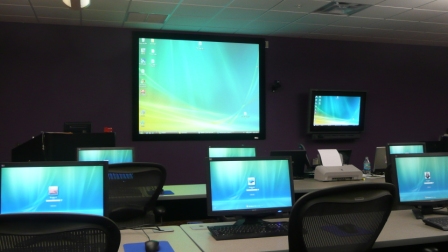 Facilities – Many of our competitors over-crowd classrooms by placing 2 to 3 students per desk and 20+ students per instructor. Often these companies “extend” the life of very old equipment with slow performance on the software used today. Our average class size is 8 students. Our facilities have the best equipment with the most comfortable, focused environment for learning.
Instructors – Our CEO holds one of the rarest Microsoft Certifications – the Microsoft Certified Learning Consultant (MCLC) Certification. This certification reflects a commitment to make sure our instructors are also actively engaged in real world consulting projects. Students expect a professional who can answer questions and demonstrate the technology.
Face to Face Training – We believe the best way to interact and learn is face to face training. Many of our competitors which offer local training are simply providing students with headphones/mic to attend class with an instructor at a remote location.
Test Pass – We offer a free retake voucher (if needed) for each of the exams required for certification. Any training center offering a “100% pass guarantee” would have to use unethical practices or unlimited test vouchers (which is not likely or practical).
Distractions – Students often look for a “local” training center so they can be close to home and work. Boot camp requires a tremendous time commitment during the program. Long class hours combined with self study each evening. The goal of boot camp is to achieve certification in a fraction of the time. We strongly recommend students attend camp away from home and work in a focused, distraction free environment.
Boot Camp – Boot camp is an accelerated training focused on teaching technology and testing students on the official exams. Most training providers “added” boot camps to the existing standard training classes they offer. These training centers think a boot camp is just a regular class where you send the student home with a voucher on the last day. Career Camps administers exams throughout the camp. Equally important – not every trainer can teach a boot camp and not all courseware is designed for boot camp format. Our trainers know the boot camp format and our courseware is designed for accelerated learning.
Florida – Career Camps has one of the most scenic locations boasting some of the best weather in US. We believe students should have a comfortable and inviting atmosphere while attending these otherwise intense programs. We place our location, facilities and amenities up against that any competitor.
Microsoft Gold Learning Partner
Career Camps has developed a comprehensive training / delivery format focused on learning beyond the generic book content (accessible to any Microsoft training provider). Our program incorporates interactive demonstrations and detailed real world explanations. When possible – additional content, videos, labs & demonstrations are provided to expand on advanced topics – providing additional insight and perspective. Career Camps training is not the typical book & PowerPoint presentation found at any local training center.
As a Microsoft Certified Partner with Gold Learning Competency – we adhere to the strict guidelines, standards and requirements to use Microsoft’s exclusive curriculum. More over – our standards go beyond the “minimum requirements” set forth by Microsoft Learning.
We leverage our partnership benefits of courseware customization to build end to end technology training solutions. Students gain practical skills which can be implemented immediately.
At most training centers – learning starts on the first day of class and ends on the last day. Our boot camp training program is designed to offer resources before, during and after the training.
What You'll Learn
• Use Microsoft Fabric to support end-to-end enterprise analytics solutions
• Discover, connect to, and manage data using OneLake
• Create and work with lakehouses, warehouses, and eventhouses
• Choose the right Fabric data store for different analytics scenarios
• Transform data using Dataflows Gen2, notebooks, Spark SQL, PySpark, and T-SQL
• Design dimensional models for analytics workloads
• Create DAX calculations in Power BI semantic models
• Design, optimize, secure, and manage semantic models at scale
• Prepare semantic models and gold layers for AI, Copilot, data agents, and enterprise ontologies
• Understand Microsoft Fabric IQ and create ontologies
• Secure data access across Microsoft Fabric workspaces, items, warehouses, and semantic models
• Apply governance practices such as data classification, sensitivity labels, endorsement, and documentation
Course Outline
Introduction to end-to-end analytics using Microsoft Fabric
- Discover how Microsoft Fabric can meet your enterprise's analytics needs in one platform. Learn about Microsoft Fabric, how it works, and identify how you can use it for your analytics needs.
- Explore end-to-end analytics with Microsoft Fabric
- Explore data teams and Microsoft Fabric
- Enable and use Microsoft Fabric
Discover and connect to data in OneLake
- Browse and connect to data using Microsoft OneLake's unified storage. Discover data across workspaces with the OneLake catalog, create shortcuts to reference existing data, and explore streaming sources in Real-Time hub.
- Understand OneLake
- Browse and connect to data in OneLake
- Discover streaming data in Real-Time hub
- Exercise: Discover and connect to data in OneLake
Get started with lakehouses in Microsoft Fabric
- Lakehouses in Microsoft Fabric combine data lake storage flexibility with data warehouse analytical capabilities. Learn how to create a lakehouse, ingest and transform data, and query data with SQL and Spark.
- Describe lakehouse features and capabilities
- Ingest and transform data in a lakehouse
- Query and analyze lakehouse data
- Exercise: Create a Microsoft Fabric lakehouse
Get started with data warehouses in Microsoft Fabric
- Understand what a Fabric data warehouse is, why it provides full T-SQL transactional capabilities, and how to create, query, and transform data for analytics.
- Understand data warehouses
- Understand data warehouses in Fabric
- Query and transform data
- Model data in a warehouse
- Secure and monitor a warehouse
- Exercise: Create and query a warehouse
Get started with Real-Time Intelligence in Microsoft Fabric
- Real-Time Intelligence in Microsoft Fabric helps you ingest, process, store, visualize, and act on data in motion to get insights from events as they happen.
- What is real-time data analytics?
- Real-Time Intelligence in Microsoft Fabric
- Ingest and transform real-time data
- Store and query real-time data
- Visualize real-time data
- Automate actions
- Exercise: Get started with Real-Time Intelligence in Microsoft Fabric
Choose data stores in Microsoft Fabric
- Evaluate lakehouse, warehouse, and eventhouse options to select the appropriate analytical data store for business scenarios in Microsoft Fabric.
- Describe analytical data store options
- Evaluate lakehouse capabilities
- Evaluate warehouse capabilities
- Evaluate eventhouse capabilities
- Case study: Choose data stores for an integrated analytics solution
Design dimensional models for analytics in Microsoft Fabric
- Learn dimensional schema types, fact and dimension table design, and slowly changing dimension patterns for analytics workloads in Microsoft Fabric.
- Describe dimensional schema types
- Design fact tables
- Design dimension tables
- Implement slowly changing dimensions
- Exercise: Design and implement a dimensional model
Transform data using Dataflows Gen2 in Microsoft Fabric
- Apply low-code transformations using Power Query in Dataflows Gen2 to prepare analytical data for downstream consumption.
- Understand Dataflows Gen2
- Transform data with Power Query
- Optimize Dataflows Gen2 performance
- Exercise: Transform data with Dataflows Gen2
Transform data using notebooks in Microsoft Fabric
- Use Fabric notebooks to transform data with Spark SQL and PySpark, connecting to lakehouses, warehouses, and other data stores.
- Describe notebooks in Fabric
- Shape and clean data
- Combine and aggregate data
- Write and size Delta tables
- Exercise: Transform data with notebooks
Transform data using T-SQL in Microsoft Fabric
- Use T-SQL in Microsoft Fabric warehouses to transform and query data, create reusable views and stored procedures, and build dimensional tables.
- Transform data with T-SQL queries
- Create views for reusable logic
- Build stored procedures
- Implement dimensional tables
- Exercise: Transform data with T-SQL
Create DAX calculations in semantic models
- Adding DAX calculations to Power BI semantic models allows you to define custom logic within your data model, enabling deeper analysis and data-driven business decisions.
- Create calculated tables
- Create calculated columns
- Understand implicit measures
- Create explicit measures
- Use iterator functions
- Exercise: Create DAX calculations
Design semantic models for scale in Microsoft Fabric
- Design semantic models for scale in Microsoft Fabric. Choose the right storage mode, design star schema relationships for clarity and performance, create scalable calculation patterns, and configure settings that support large datasets and concurrent consumption.
- Choose a storage mode
- Design star schema for semantic models
- Design scalable calculations
- Configure settings for scale
- Exercise: Design a semantic model for scale in Fabric
Optimize semantic model performance
- Diagnose and fix semantic model and report performance issues. Use Performance analyzer to identify bottlenecks, optimize DAX calculations, reduce cardinality, and implement aggregations to improve query speed.
- Use Performance analyzer to diagnose issues
- Optimize DAX calculations
- Reduce cardinality for better performance
- Implement aggregations
- Troubleshoot common performance issues
- Exercise: Diagnose and fix a slow report
Enforce semantic model security
- Implement row-level security, object-level security, and dynamic security patterns to protect sensitive data in semantic models while enabling appropriate access for different user groups.
- Implement row-level security
- Apply object-level security
- Test security and manage roles
- Exercise: Implement RLS for a semantic model
Manage the semantic model development lifecycle
- Manage semantic models through their full development lifecycle. Create reusable assets, version-control with Git, inspect and validate with the XMLA endpoint and SemPy, deploy through pipelines, and maintain with monitoring and impact analysis.
- Create reusable Power BI assets
- Manage Power BI content in version control
- Manage semantic models with the XMLA endpoint
- Deploy content through stages
- Maintain and monitor semantic models
- Exercise: Manage semantic models through their lifecycle
Prepare the semantic layer for AI in Microsoft Fabric
- Design gold layers, semantic models, and documentation that enable Copilot, data agents, and enterprise ontologies to deliver accurate, business-relevant insights.
- Understand what AI needs from your data
- Design gold layers with AI in mind
- Prepare a semantic model for AI
- From semantic models to enterprise ontology
- Validate AI readiness
- Exercise: Prepare a semantic model for AI
Understand Microsoft Fabric IQ fundamentals
- Microsoft Fabric IQ provides a way to define business vocabulary in an ontology and bind the ontology to data sources. Learn about ontology items, data agents, Graph in Microsoft Fabric, and Power BI semantic models. Discover how ontology modeling differs from traditional analytical modeling by starting with business concepts rather than specific use cases.
- Get started with Fabric IQ
- Explore Microsoft Fabric IQ components
- Understand the ontology modeling paradigm
Create an ontology with Fabric IQ
- Ontologies in Fabric IQ transform your data into a business vocabulary that everyone can understand. Learn two ways to create ontologies: building manually to understand the core components, or generating automatically from Power BI semantic models to accelerate development. Practice both approaches and learn how to connect your ontology to data sources in OneLake, including lakehouse tables and eventhouse streams.
- Choose an ontology creation approach
- Build an ontology manually
- Generate an ontology from a Power BI semantic model
- Connect an ontology to data
- Configure ontology relationships
- Preview the ontology
- Exercise: Build an ontology manually
- Exercise: Generate an ontology from a Power BI semantic model
Secure data access in Microsoft Fabric
- Implement workspace roles, item permissions, and OneLake security roles to control data access in Microsoft Fabric.
- Understand the Fabric security model
- Configure workspace and item permissions
- Apply granular permissions
- Exercise: Secure data access in Microsoft Fabric
Secure a Microsoft Fabric data warehouse
- Learn how to protect sensitive data in a Microsoft Fabric warehouse using dynamic data masking, row-level security, column-level security, and SQL granular permissions.
- Explore dynamic data masking
- Implement row-level security
- Implement column-level security
- Configure SQL granular permissions using T-SQL
- Exercise: Secure a warehouse in Microsoft Fabric
Govern analytics data in Microsoft Fabric
- Implement Fabric-native governance practices including data classification, sensitivity labels, endorsement, and documentation. Ensure data assets are trustworthy and governed for both human and AI consumption.
- Classify and protect data in Microsoft Fabric
- Endorse and document data assets
- Govern data for AI consumption
- Exercise: Govern analytics data in Microsoft Fabric
Frequently Asked Questions
What is the Microsoft Fabric Analytics Engineer Certification Boot Camp?
The Microsoft Fabric Analytics Engineer (DP-600) Boot Camp is instructor-led training designed to help data professionals develop the skills needed to design, implement, secure, and manage enterprise-scale analytics solutions using Microsoft Fabric. The training prepares students for the DP-600: Implementing Analytics Solutions Using Microsoft Fabric certification exam.
What Microsoft Fabric technologies are covered in the course?
The training covers key Microsoft Fabric capabilities, including OneLake, lakehouses, data warehouses, Real-Time Intelligence, Dataflows Gen2, notebooks, T-SQL, semantic models, Fabric IQ, ontologies, security, governance, and analytics lifecycle management.
Who should take Microsoft Fabric Analytics Engineer training?
The DP-600 boot camp is designed for experienced data professionals, including data analysts, data engineers, analytics engineers, and other professionals who work with enterprise data and analytics solutions. Familiarity with data modeling, analytics, SQL, and Microsoft data technologies is recommended.
Do I need previous Microsoft Fabric experience?
Microsoft Fabric experience is helpful but not necessarily required. However, DP-600 is an intermediate-level certification, so students should have experience working with data, analytics, data modeling, SQL, or related data technologies before taking the boot camp.
What is Microsoft Fabric?
Microsoft Fabric is an end-to-end data and analytics platform that brings together data integration, data engineering, data science, data warehousing, real-time analytics, and business intelligence. It is designed to provide organizations with a unified environment for working with data and analytics.
Is DP-600 a beginner certification?
No. DP-600 is designed for experienced data and analytics professionals rather than beginners. The certification focuses on implementing enterprise-scale analytics solutions with Microsoft Fabric.
Related products
-


MCA Microsoft Azure Database Administrator Certification (DP-900, DP-300) Boot Camp
Price range: $3,495.00 through $4,495.00 Course Details This product has multiple variants. The options may be chosen on the product page -
MCA Microsoft SQL AI Developer Associate Certification (DP-900, DP-800) Boot Camp
Price range: $2,995.00 through $3,495.00 Course Details This product has multiple variants. The options may be chosen on the product page -
MCA MLOps Engineer Associate Certification (AI-300) Boot Camp
Price range: $2,795.00 through $3,499.00 Course Details This product has multiple variants. The options may be chosen on the product page -
MCA Intelligent Applications Builder Certification (AB-410) Boot Camp
Price range: $2,295.00 through $2,595.00 Course Details This product has multiple variants. The options may be chosen on the product page


Ready to Take the Next Step?
Choose your upcoming training date or talk with our training advisors about the right option for you or your team.